
Renewable Energy and Alternative Energy
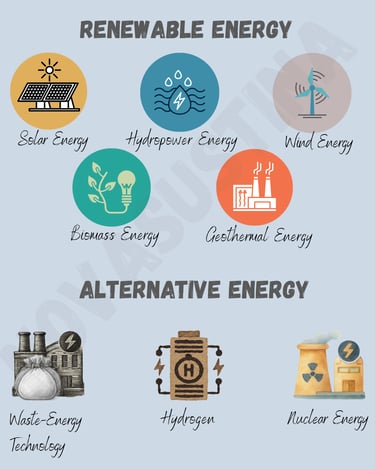
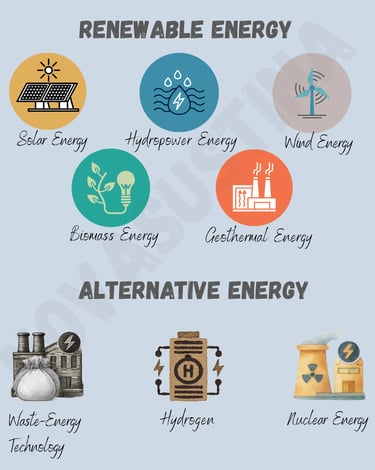
Global alliances aim to reduce their dependence on fossil fuels as a major source of energy. The world cannot stop relying on fossil fuels immediately, as this will bring a chaotic ground with inexplicable consequences. This warrants phasing out fossil fuels and replacing it with renewable energy and alternative energy. Over the past decade, renewable energy has been growing globally to a point where, as of 2024, around 40% of the World's electricity comes from renewable energy (Our World in Data). The change, while very possible, brings in a lot of challenges globally, these include:
Grid Flexibility - Certain energy grids were originally tailored to accommodate steady and controlled energy release. With solar and wind energy, there's an element of fluctuation depending on the weather, and grids may not be able to handle the fluctuation or 'spiky' nature of solar and wind, and hence curtailment occurs when they cannot utilise energy from these sources, resulting in lost potential green energy. Watch this video for more: The 'duck curve' is solar energy's greatest challenge.
Bureaucracy - Waiting for permits for grid connectivity, land-use, and environmental approvals can take a long time, as can planning and acquiring financing.
Financing - Building renewable energy structures is a heavy capital investment that needs a long-term perspective. Financing is also influenced by the commodities market, as materials can cause differentials during spikes.
Material Intensity - Materials are needed for the following main aspects: grid expansion, construction/manufacturing, and battery storage. Acquiring materials through mining is an environmental and often social challenge, and how and where they're handled and produced brings in other areas of concern. China is a dominant exporter of renewable energy products, and mines, processes, and exports many rare earth materials. Read more on how disruptions and trade tensions can be a major deterrent.
Renewable energy sources come from natural resources that can be replenished and provide energy to be harnessed during their own natural cycle. These include energy from sun, wind, water, geothermal, biofuel, and the International Renewable Energy Agency also recognises Marine Energy.
Alternative energy, in simple terms, refers to any non-fossil fuel energy. It includes renewable energy, but with the inclusion of non-renewable energy such as nuclear energy.
This report explores all sources and renewable and alternative energy, their uses, production and impact. Jump to section:
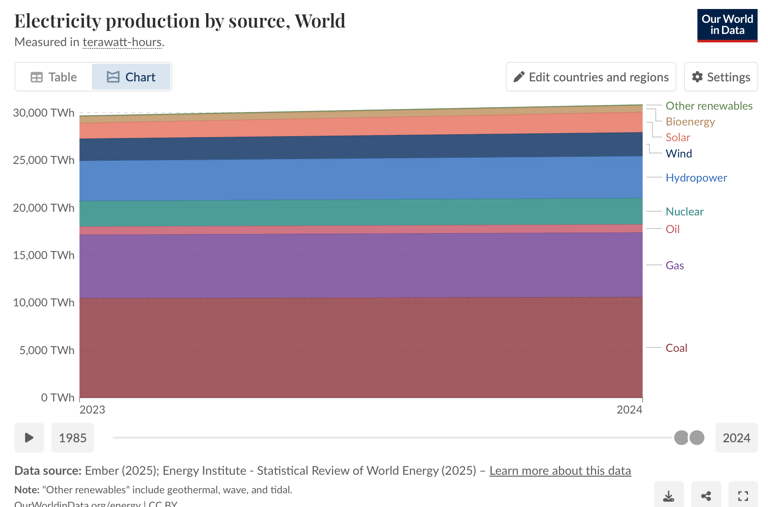
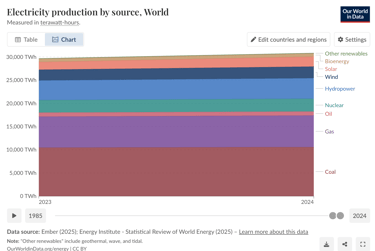
Last updated on 11th December 2025
Solar Energy
Solar Energy, in its basic form of definition, as explained by IRENA (International Renewable Energy Agency), is energy harnessed by sunlight and converted into electricity using two methods:
1) Solar Photovoltaic (PV) - The most commonly used and heavily invested type of renewable energy. They can be used on rooftops and vary in range and size. They require Silicon wafers, silver and copper to convert the sunlight into electricity. This is now the most affordable source of energy (41% cheaper than fossil fuels), and is predicted to be the largest source of renewable energy by 2030 (IEA). Countries progressing in solar PV include China, EU, USA, India and Brazil.


Image Source: IEA - https://www.iea.org/reports/solar-pv-global-supply-chains/executive-summary
2) Solar thermal panel - According to Nationalgrid.com, solar thermal panels differ from solar PV as solar PV works through a more complex mechanism, solar thermal uses a simple process of heating water or fluids through sunlight and can be used for domestic use on a larger scale for power stations.
3) Concentrated Solar Power (CSP) - used mainly for large-scale power uses mirrors to concentrate solar rays on a solar tower/power tower. Solar collectors concentrate solar irradiation through linear concentrating (also called parabolic trough collectors) or point concentrating. These rays heat fluid, which creates steam to drive turbines to generate electricity. Watch the process: https://youtu.be/FgjfJGfusdE?si=YGfJETclKAKAzM1f
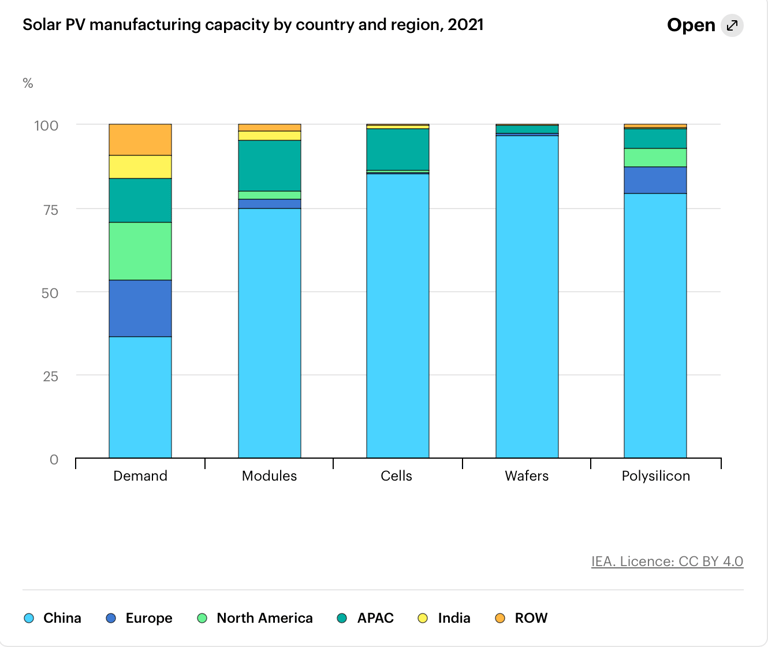
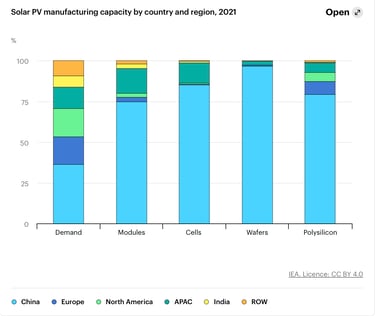
Image Source: IEA - https://www.iea.org/reports/solar-pv-global-supply-chains/executive-summary
What future considerations are there for solar energy?
Firstly, solar panels need a storage solution and a grid connectivity solution. Secondly, solar panels are build to last 20-30 years, and that poses the question 'what next'? How can they be recycled? Watch an interesting video from DW about recycling solar panels and their challenges: https://youtu.be/34efX2y127M?si=SK2tvWCO-3R5rC2d. Thirdly, how are geopolitical risks and material needs going to be considered when factored into the long-term growth of solar energy? A development of Perovskite solar cells to replace existing panels is being developed, and if they become financially viable, then we're looking at solar farms being technologically obsolete to their counterpart, which is more efficient and light-weight.


Wind Energy
Harnessing wind power has been historically used before the urgency of renewable energy came in. The basics of the mechanism is to use the wind's kinetic energy to mechanical energy, which then converts to electric energy (see picture on the left). According to the IEA, wind energy is the second fastest-growth in renewable energy source after solar energy. Like solar, wind energy also presents its challenges; i) it is solely reliant on wind speeds which differs from time to time and is intermittent in nature, ii) it is expensive in funding and materials to build tall wind farms (taller is better), iii) optimal 'windiest' locations are far from cities which require longer transmission cables, iv) a dark side to wind turbines is the cause of bird deaths and disrupting bird flight paths, to counter this RWE and Iberdrola have been experimenting with painting one blade black to prevent bird collisions, and v) combating the material intensity of expanding wind farms and the environmental impacts that comes from it. A positive area is the recyclability of wind turbines, with a lifespan of 25-30 years; decommissioned turbines are expected to be 90% recyclable.
Types of wind energy:
1) Onshore wind farms: These are present on land, on fields, and are the most dominant and affordable form as of now.
2) Offshore farms: Involves turbines built on sea bodies to harness the stronger wind power. Wind farms can be built with a 'fixed-bottom' foundation on shallow waters, or further in the ocean, have a floating mechanism that is anchored to the seabed. Read about more from the global leader in offshore wind energy, Ørsted.
According to the World Wide Energy Association (WWEA), China leads the wind energy capacity (over 70% of the global market), followed by the USA, Germany, India, Brazil, the UK, Spain, France, Sweden, and Australia. These make up the top 10. The largest wind farms globally are in China, USA, India and UK.


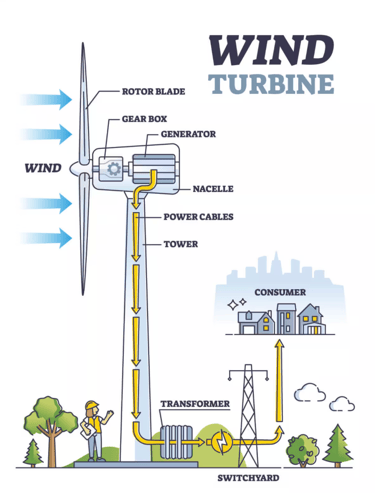
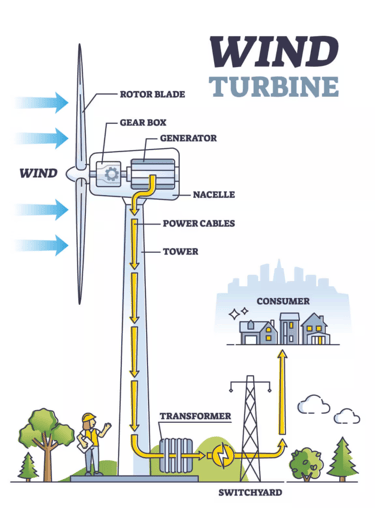
Image Source: Kanoppi Wind Power https://kanoppi.co/glossary/wind-power/
Hydropower and Marine Energy
According to IEA, hydropower is the third-largest provider of electricity worldwide after coal and natural gas, and the largest contributor to renewable energy. In 2024, it generated 14% of the global total. Hydropower also serves as a buffer for solar and wind energy. Unlike solar and wind, some hydropower facilities have the ability to provide a stable supply to the grid. The image on the right portrays countries that heavily rely on hydropower energy. Types of hydropower include:
1) Run-of-river - this generates electricity using the flow of the river and turbine generators, and it's more intermittent in nature.
2) Reservoirs - controlled water storage which can be adjusted to generate electricity on demand using turbines.
3) Pumped storage hydropower (PSH) - this method circulates water between two bodies of water at different elevations - one higher and one lower (typically mountainous regions), where water is pumped to the upper region to store energy and released to the lower region when there is demand for electricity. China's Fengning Pumped Storage Power Station is the world's largest station.
4) Offshore (marine) hydropower: This is a growing area where technology is implemented to use tidal current or waves to generate electricity from seawater.
Drawbacks of hydropower:
1) Financial challenges - the funding required for large-scale projects has historically proved to be challenging. For example, Muskrat Falls in Canada originally predicted around $7 billion, but actual costs were much higher and required additional financing, which puts a strain on local economies. Decommissioning dams also poses financial challenges.
2) Resource-intensive - the generation of dams requires a lot of concrete, steel, and other materials. For example, Itaipu Dam in Brazil and Paraguay required concrete to the equivalent of 210 stadiums the size of Maracanã, and steel and iron to the equivalent of 380 Eiffel Towers. There's the factor of accounting for the carbon emissions from resource intensity.
3) Maintenance - Maintaining reservoirs and silting causes challenges such as loss in water storage capacity and reduced dirt and soil flowing to settle down naturally. For example, the Tarbela Dam in Pakistan has lost 40% water storage due to silting.
4) Environmental challenges - the plight of fish; dams disrupt the migration of fish, for example, the Chinese paddlefish extinction occurred in large part due to dams in the Yangtze River. Another challenge involves the rotting vegetation at the bottom of reservoirs in tropical regions, which releases methane.
5) Geopolitical hurdles - cross-border water bodies create political tension as fights over who gets to claim usage.
Sustainability Certified Hydropower projects can be seen here: https://www.hs-alliance.org/certified-projects
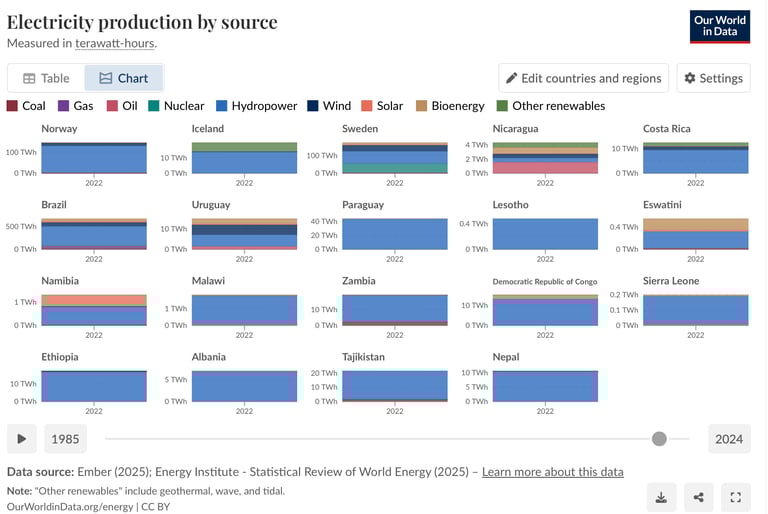
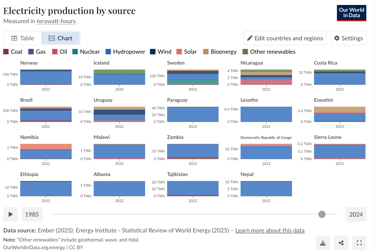
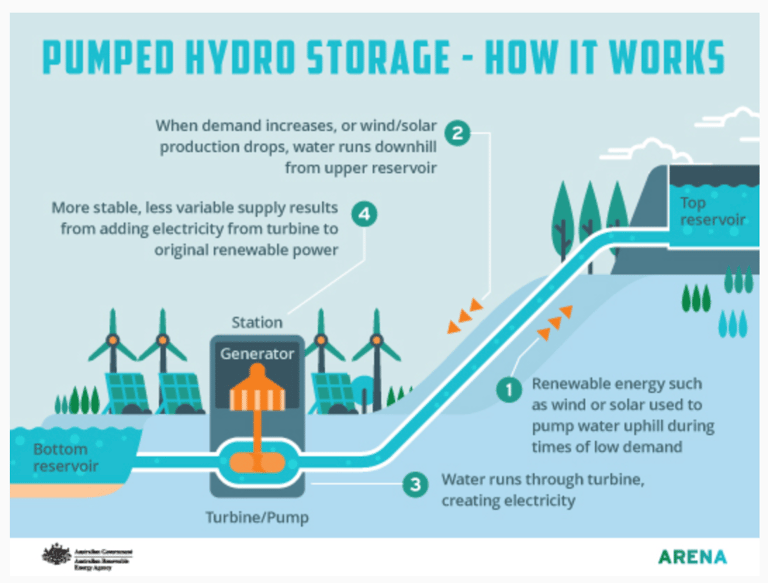
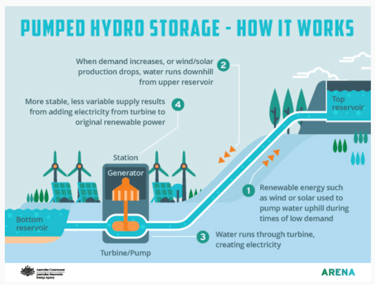
Image Source: Australia Renewable Energy Agency https://arena.gov.au/blog/what-is-pumped-hydro-and-how-does-it-work/
Biofuels
Biofuels have been mainly in the spotlight as a means to decarbonise the transport industry (aviation and shipping). Biofuels or bioenergy refer to energy generated from organic materials, such as bio (organic) waste from industrial or household use, agricultural crop residue, forestry residue, or woody biomass, among others, as noted in the picture. There are three types of biofuels: i) Solid biofuels, for example, logs, sawdust, and agricultural residue like wheat straws, ii) Liquid biofuels such as ethanol, organic waste oil, and iii) Gaseous biofuels such as biomethane and syngas.
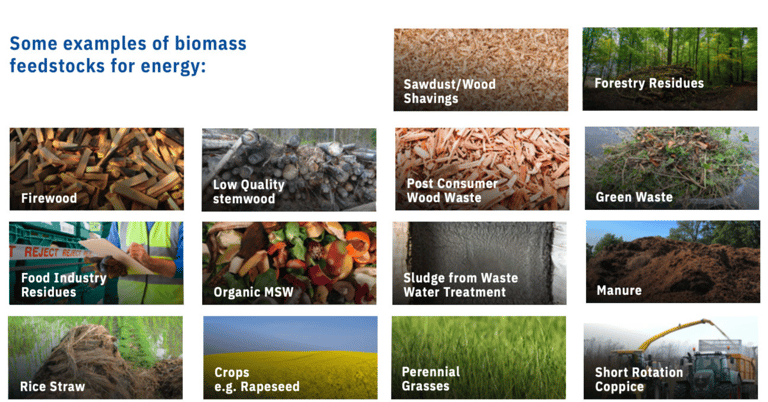
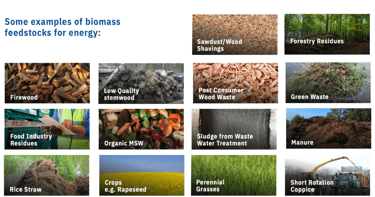
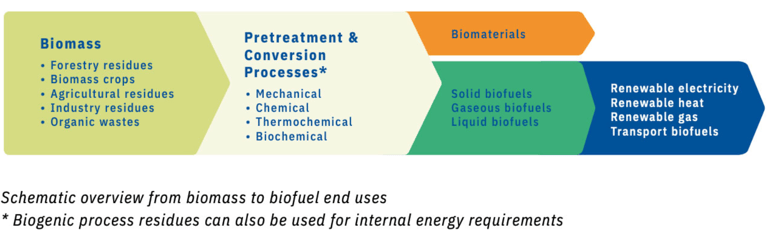
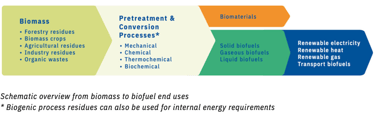
Image Source: IEA Bioenergy 2025 https://www.ieabioenergy.com/blog/publications/what-is-bioenergy/
Image Source: IEA Bioenergy 2025 https://www.ieabioenergy.com/blog/publications/what-is-bioenergy/
According to IEA, Bioenergy accounts for 6% of the global energy supply. All forms of renewable energy have their own carbon footprint, especially when it comes to building their processes and their end-of-life. Bioenergy has a different mechanism to its workability, and this is based on the carbon loop - plants sequester carbon from the air, and the same residual mass from them is used to create energy that returns the carbon back into the atmosphere. With progressive growth on Carbon Capture and Storage Technology (CCS), the IEA predicts that Bioenergy combined with CCS could account for 15-20% of global energy supply by 2050.
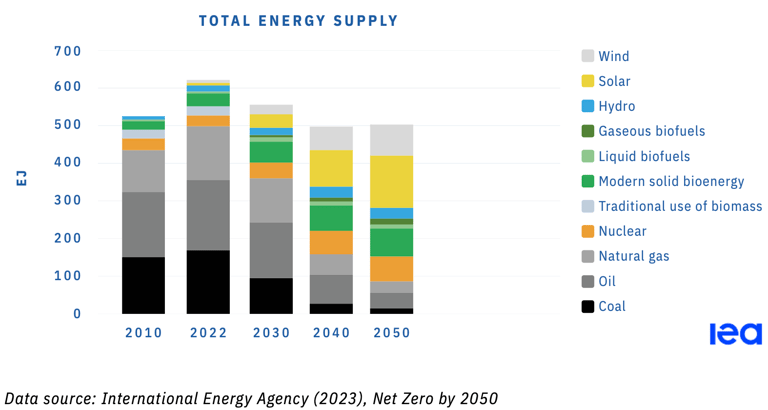
Biofuels have gone through different stages or generations; which makes it important to understand the direction this sector takes. The EVS Institute has a detailed section on the 4 generations:
i) First generation - comprises food crops such as cane, palm, corn, soybeans, and rapeseed, which bring in multiple negative notions such as increased deforestation, decreased soil health, and the choice of food or fuel.
ii) Second generation - use of agricultural waste as opposed to the consumable product for other uses. It involves a more complex process and needs to be efficient in terms of energy produced versus energy used.
iii) Third generation - using algae as the primary source is a revolutionary leap since algae grows fast and needs relatively fewer resources; however, the technology needed to process it is expensive and energy-intensive.
iv) Fourth generation - Synthetic and genetically modified technology. The technology, whilst in early stages, poses certain advantages for CCU (carbon capture and utilisation), but still isn't economically or financially feasible at the current stage.
Biofuels are of much interest to the aviation and shipping transport industry because they are low-carbon alternatives, and their other renewable options are limited, as aviation cannot carry heavy batteries. More information is linked to Sustainable Aviation Fuel. Biofuels pose multiple challenges, including the very high costs of processing, the price tied to commodity markets, deforestation, and geopolitical tensions.
Geothermal
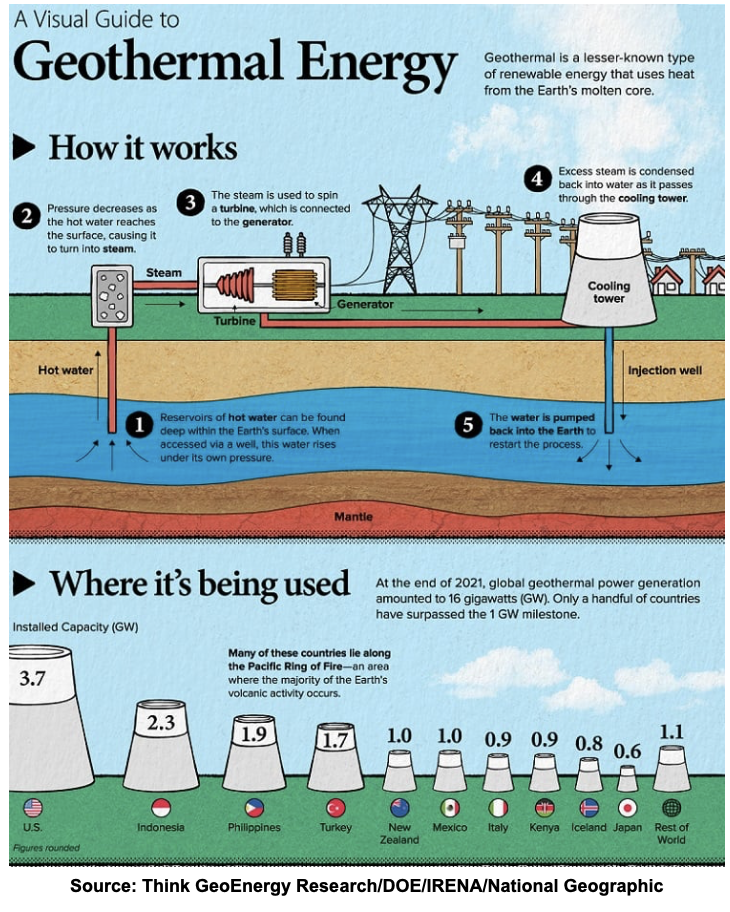
In the simplest way to understand the renewable energy giant that is geothermal energy, this deeply encapsulating video from Bloomberg Originals says it all: https://youtu.be/xM31ZUv5Bqg?si=simk1uLBC_4yrnRd
Future technology to explore:
1) EGS (Enhanced Geothermal System) - this involves drilling into hot dry rock anywhere, fracturing it (similar to fracking), and injecting water to create a reservoir. This could theoretically power the entire world, not just geographically lucky areas. Read more on: https://www.energy.gov/eere/geothermal/enhanced-geothermal-systems
2) Closed-loop AGS (Advanced Geothermal Systems) - Instead of pumping groundwater out, a sealed fluid circulates through a deep underground radiator (without touching the surrounding rock), picks up heat, and returns. Less pollution and seismic activities.
Key challenges of Geothermal energy:
1) Capital and Resource Intensive - the drilling costs and maintenance (due to scaling) make it already very capital-intensive. The resources needed include steel, cement, nickel alloys, and titanium. As stated by the IEA, 'Despite accounting for less than 1% of all low-carbon power capacity additions in 2040, geothermal power is a major source of demand for nickel, chromium, molybdenum and titanium from the power sector. Of the total mineral demand from all low-carbon power sources in 2040, geothermal accounts for 80% of nickel demand, nearly half of the total chromium and molybdenum demand, and 40% of titanium demand.' Read more: https://www.iea.org/reports/the-role-of-critical-minerals-in-clean-energy-transitions/mineral-requirements-for-clean-energy-transitions
2) Environmental implications - geothermal projects have previously induced earthquakes, and they release certain gases trapped in the surface. They also require a lot of water.
Nuclear Energy
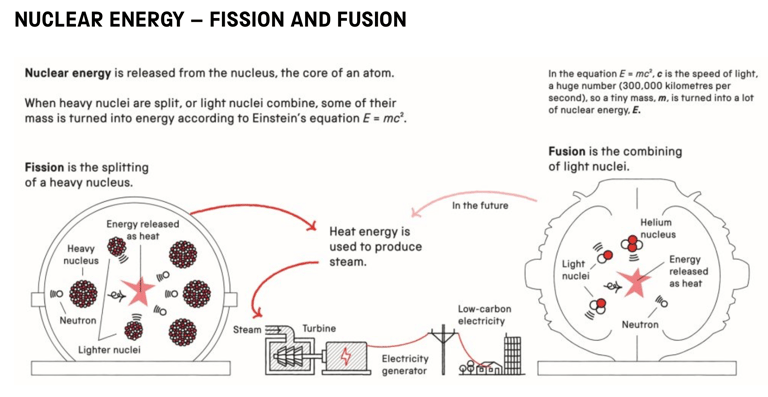
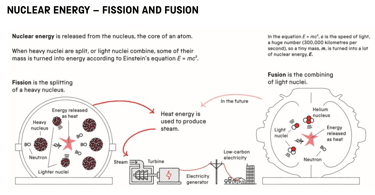
Source: Science Museum, 2024 https://www.sciencemuseum.org.uk/objects-and-stories/nuclear-energy
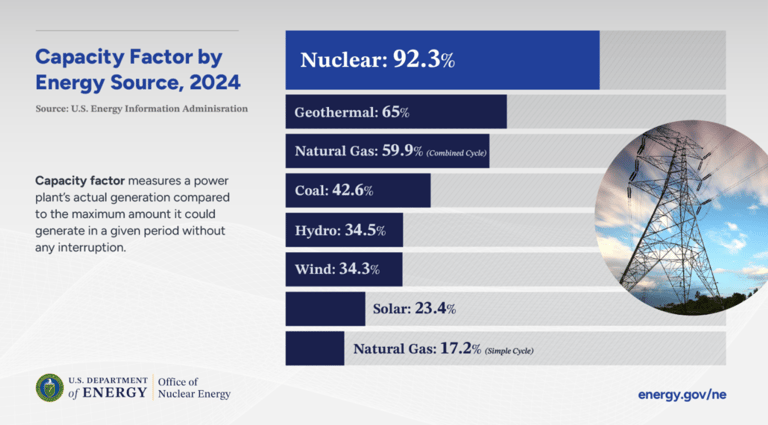
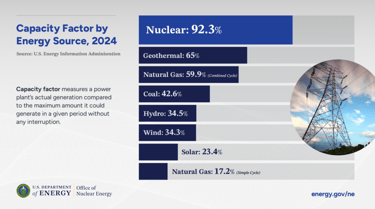
Source: US Department of Energy, 2025 https://www.energy.gov/ne/articles/what-generation-capacity
Nuclear energy has had its share of widespread stories of catastrophic risks, hazardous materials, high costs, geopolitical issues, and high water usage. For this reason, this segment will feature on future feasible technologies. The images illustrate how nuclear energy works and highlight its high capacity factor compared to other forms of energy.
SMRs and AMRs - Small modular reactors (SMRs) and advanced modular reactors (AMRs) are emerging technologies that are portable nuclear reactors based on nuclear fission, and are cheaper, more financially viable to produce compared to building large power plants. They can produce roughly a 1/3 of what large nuclear power plants can over a day, depending on their size. The difference between SMRs and AMRs is that AMRs are based on non-light water technology (coolants like liquid metals, molten salts, or gases instead of ordinary water. According to the International Atomic Energy Agency (IAEA), SMRs have increased safety measures and require less frequent refueling compared to conventional plants.
Hydrogen
The science behind green hydrogen is sound and feasible. However, challenges and considerations are still there regarding what technology they use for their electrolysers. Green hydrogen relies on machines called Electrolysers. These machines are material-intensive and have their own carbon footprint. According to IEA, there are four technologies, two are commercially viable, and these are Alkaline and Proton Exchange Membrane (PEM) technologies. PEM technology is currently in use in the Refhyne & Refhyne 2 project. The other two technologies are still maturing but are projected to be more efficient and environmentally friendly in comparison due to less need for mining rare minerals. These are Solid Oxide Electrolyser Cell (SOEC) and Anion Exchange Membrane (AEM).
Green Hydrogen has its challenges, including high costs, limited infrastructure, and high energy loss during conversion. Considering that there is no 'one solution for all' and the future is in high need of a resilient and stable energy supply, the probable solution is to keep energy stored for long periods using hydrogen energy, unless batteries become cost friendly. It may not be an ideal storage medium because much of the energy is lost in the conversion process, but it is a good storage option for countries that cannot rely on a constant annual supply of solar, wind, or hydro due to the high variability of geographical and weather conditions. This is a recommendation from Sir Peter Bruce, vice president of the Royal Society, and from Chris Goodall's book 'Possible'. Read more on: https://royalsociety.org/news/2023/09/electricity-storage-report/
All about Hydrogen is so easily understandable from this clearly and simply written article from CarbonCredits: https://carboncredits.com/what-is-hydrogen-and-why-is-it-revolutionizing-energy/. As explained by CarbonCredits, there are three types of hydrogen energy generation; grey (uses natural gas to produce hydrogen and is pollutive), blue (uses natural gas but CO2 is captured using CCS), green (uses renewable energy), one more to add to this list is pink (uses nuclear energy to produce hydrogen). What this segment focuses on is Green Hydrogen to power a sustainable future. Green Hydrogen is the gold standard compared to the others as it produces no emissions during production and is made from water using renewable energy. Current Green hydrogen projects include GET H2 Nuclear, which uses wind energy to harness hydrogen, and Saudi Arabia's NEOM project, one of the largest that uses solar and wind energy.
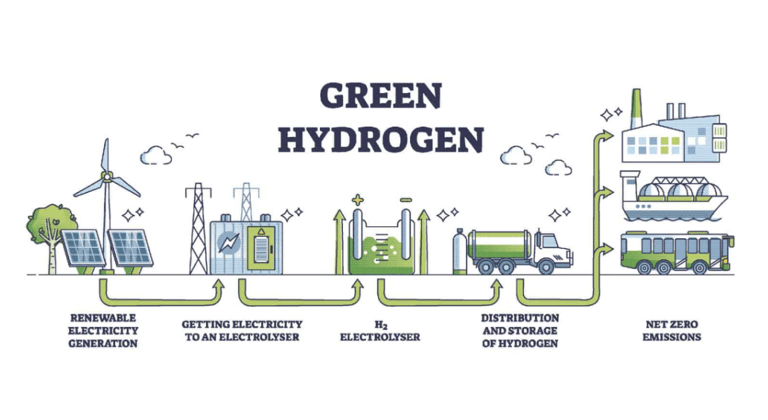
Source: CarbonCredits.com https://carboncredits.com/what-is-hydrogen-and-why-is-it-revolutionizing-energy/
Sources
https://app.electricitymaps.com/map/live/fifteen_minutes
https://www.mining.com/china-issues-first-batch-of-streamlined-rare-earth-licences/
https://www.irena.org/Energy-Transition/Technology/Solar-energy/
https://ourworldindata.org/electricity-mix
https://www.irena.org/Energy-Transition/Technology/Wind-energy
https://www.nesfircroft.com/resources/blog/the-world-s-biggest-wind-farms/
https://www.anl.gov/science-101/hydropower
https://www.ieabioenergy.com/iea-publications/faq/woodybiomass/
https://thrustcarbon.com/insights/green-hydrogen-your-questions-answered
Disclosure
This website does not send email alerts, newsletters, or unsolicited subscription requests. All contact is initiated through the contact form, which enables direct communication via personal email for those who wish to engage further.
All users are encouraged to read our Terms and Conditions